Principle Before Camera: How One Director's Ethical Foundations Became the Blueprint for 'Ethos The Movie'
There is a version of filmmaking in which the director's personal philosophy remains safely offscreen — a private matter, insulated from the machinery of production. That version has no place in the story of Ethos The Movie. From the earliest conversations about the project, the film's director made one thing unambiguous: every creative decision, however technical it might appear on the surface, would be held against a moral standard before it was approved. The result is a film that does not merely gesture toward ethical complexity but is, in a very real sense, constructed from it.
Understanding how that came to be requires looking not at the finished film, but at the person who made it — and at the experiences, relationships, and moments of reckoning that forged the compass by which every choice was ultimately measured.
A Philosophy Built in Stages, Not Classrooms
The director has spoken in various interviews about an upbringing that resisted easy moral categorization. Raised in a household where competing value systems coexisted — where religious conviction sat alongside secular pragmatism, and where community obligation frequently collided with individual ambition — the director developed an early and instinctive sensitivity to ethical tension. This was not the abstracted moral philosophy of academic discourse. It was the lived experience of watching people navigate genuine dilemmas without the comfort of clear answers.
"I grew up understanding that doing the right thing is rarely the obvious thing," the director has noted. "The people I admired most were the ones who stayed in the discomfort long enough to actually think."
That disposition — a willingness to remain inside difficulty rather than escape it — became the foundational principle of the film's creative framework. Where another director might have resolved a narrative ambiguity in favor of audience comfort, the director of Ethos The Movie consistently chose the more demanding path.
The Mentors Who Left Marks
Several key relationships shaped the director's intellectual and ethical development in ways that are directly traceable to the film's thematic architecture. A college professor of applied ethics introduced the director to the concept of moral residue — the idea that even the most justifiable decisions leave behind a remainder of responsibility that cannot be dissolved by good intentions. That concept, which might read as academic abstraction in a lecture hall, became a living structural principle in Ethos The Movie, where characters are persistently confronted with the consequences of choices they believed were correct.
Equally formative was an early mentorship under a documentary filmmaker whose work focused on systemic injustice in American communities. That collaboration instilled in the director a deep suspicion of narratives that locate moral failure exclusively in individual villains. "The most dishonest thing cinema does," the director has said, "is convince audiences that evil is rare and identifiable. Most harm is diffuse. Most complicity is ordinary."
This conviction is embedded throughout Ethos The Movie in ways both structural and subtle — in the way responsibility is distributed across the ensemble, in the refusal to grant any single character the position of uncomplicated hero.
Decision Points as Moral Checkpoints
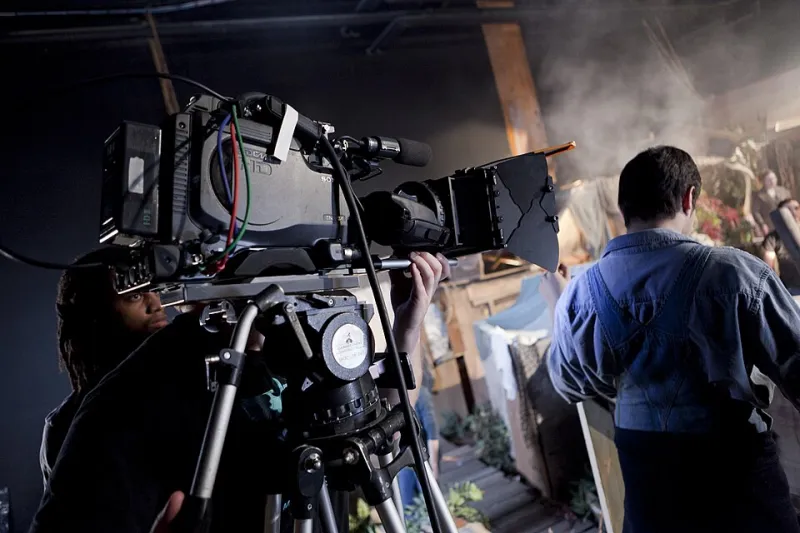
What distinguishes the director's process on Ethos The Movie from conventional filmmaking is the degree to which ethical interrogation was institutionalized within the production itself. The director has described a practice of subjecting every major creative decision — from script revisions to shot selection to the final cut — to what the team came to call a "conscience audit."
This was not a formal committee or a bureaucratic review. It was, rather, a disciplined habit of pausing before each significant choice and asking a set of consistent questions: Does this decision serve the story's moral honesty, or does it serve our comfort? Are we simplifying something that deserves complexity? Are we letting the audience off a hook they should remain on?
The practice extended to casting conversations, where the director pushed actors not merely to understand their characters but to locate within themselves a genuine personal connection to the ethical dilemmas those characters embodied. It extended to the score, where the director worked closely with the composer to ensure that the music never functioned as emotional instruction — never told audiences how to feel about a morally ambiguous moment before they had been given the space to feel it themselves.
When Personal Experience Entered the Frame
Several of the film's most quietly devastating sequences trace directly to episodes from the director's own life — moments the director has described as formative precisely because they involved a failure to act with the integrity that hindsight would have demanded. There is a particular scene midway through Ethos The Movie in which a character chooses institutional loyalty over personal honesty, and the cost of that choice is rendered not through dramatic confrontation but through a series of small, accumulating silences. The director has acknowledged that this scene was drawn from memory — from a professional situation years earlier in which the same choice was made, and the same silence followed.
"I wanted the audience to recognize that moment," the director has explained. "Not as something that happens to exceptional people in exceptional circumstances, but as something ordinary. Something most of us have done."
This willingness to mine personal moral failure as source material — rather than using cinema as a vehicle for retrospective self-justification — lends the film a quality of genuine accountability that audiences have consistently identified as one of its most distinctive and affecting characteristics.
The Line Between Conviction and Imposition
One of the more nuanced aspects of the director's creative philosophy is the sustained effort to avoid converting the film into a sermon. The director has spoken at length about the distinction between a film that embodies a moral perspective and a film that instructs its audience to adopt one — and about the considerable discipline required to remain on the right side of that line.
"The moment you start telling people what to think, you've lost them," the director has said. "And more importantly, you've stopped respecting them. The whole point is to create the conditions for genuine reflection, not to pre-package the conclusions."
This commitment to audience autonomy is visible throughout Ethos The Movie in the deliberate withholding of narrative resolution on the film's central ethical questions. Characters make choices that the film neither endorses nor condemns outright. The camera observes without editorializing. The audience is trusted — perhaps more than they are accustomed to being trusted — to do the moral work themselves.
A Framework That Outlasts the Film
What emerges from a close examination of the director's decision-making process is something that transcends the particulars of Ethos The Movie as a single production. It is a coherent and transferable philosophy of ethical filmmaking — one that insists on treating moral seriousness not as a theme to be explored but as a discipline to be practiced at every stage of the creative process.
For American cinema, which has long been more comfortable with moral clarity than moral complexity, that philosophy represents a meaningful and potentially lasting provocation. The director of Ethos The Movie has not simply made a film about conscience. The director has demonstrated what it looks like to make a film with one.