Seven Moments of Deliberate Sacrifice: The Creative Choices That Made 'Ethos The Movie' Impossible to Ignore
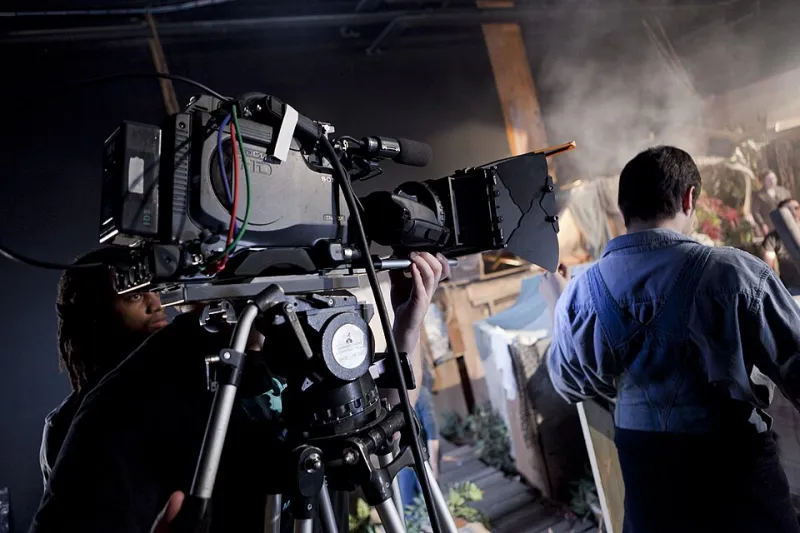
Photo: vancouverfilmschool, CC BY 2.0, via Wikimedia Commons
Making a film that genuinely means something is, in practical terms, an exercise in strategic restraint. It requires the ability to recognize what must be protected and the willingness to surrender what must be released. The production of 'Ethos The Movie' was shaped by exactly this discipline — a series of calculated decisions in which the creative team chose artistic integrity over the safer, more commercially familiar alternative. Each of those decisions left a mark on the finished film. Here are seven of the most consequential.
1. Refusing the Explanatory Epilogue
Late in post-production, pressure mounted from multiple directions to append an epilogue that would contextualize the film's final sequence and provide audiences with a clearer emotional resolution. Test screenings had produced a subset of viewers who found the ending ambiguous to the point of frustration, and the data was not easy to dismiss.
The creative team held firm. The decision, as one producer described it in a recent conversation, came down to a single question: "Are we making this for the people who are frustrated, or for the people who are changed?" The epilogue was never shot. The film's final image remains exactly as originally conceived — open, demanding, and entirely unwilling to perform closure it has not earned.
2. Casting Against Commercial Expectation
Several of the film's central roles were offered, at various stages of development, to talent whose names would have substantially eased the path to wider distribution deals. In each case, the casting process ultimately prioritized fit over profile. The actors who appear in 'Ethos The Movie' were selected because they brought an authentic relationship to the material — not because their presence would simplify conversations with distributors.
This decision carried real financial risk. Distribution negotiations were, by all accounts, more protracted as a result. The casting director involved has noted that the process required defending choices that were difficult to justify on a spreadsheet but were immediately apparent on screen.
3. Eliminating a Commercially Viable Subplot
An early draft of the screenplay contained a secondary narrative thread that tested exceptionally well with preview audiences. It was engaging, emotionally accessible, and entirely compatible with the film's broader themes. It was also, upon deeper examination, a distraction — a concession to palatability that subtly undermined the moral seriousness of the primary story.
The subplot was removed entirely during a script revision that the writing team has described as one of the most difficult editorial sessions of the project. The material was not bad. That, paradoxically, made cutting it harder. "Good material that softens your argument is more dangerous than weak material," one of the writers observed. "It gives you permission to compromise."
4. Rejecting a Score That Guided Audience Emotion Too Precisely
The film's original composer delivered a score that was, by conventional standards, exceptional. It was emotionally sophisticated, technically accomplished, and highly effective at directing the audience toward specific feelings at specific moments. That last quality proved to be the problem.
The creative team ultimately parted ways with the original score and commissioned a replacement built around a different philosophy — one that accompanied the film's emotional landscape without mapping it. The revised score leaves considerably more interpretive space for the viewer. It is a subtler achievement, and a less immediately impressive one, but it honors the film's commitment to trusting its audience rather than managing them.
5. Declining a Prominent Festival Slot That Required a Cut
An invitation to screen at a significant American film festival arrived with an informal understanding that a particular sequence — one that had generated concern among festival programmers — would be modified or removed. The sequence in question is among the most morally challenging in the film. It is also, in the view of the production team, among the most essential.
The invitation was declined. The film screened elsewhere, without alteration, and found an audience that engaged with it on its own terms. The producers have since described the decision as straightforward in retrospect, though considerably less so at the time.
6. Choosing a Longer Runtime Against Distribution Advice
Conventional distribution wisdom holds that films exceeding a certain runtime face measurable disadvantages in theatrical scheduling — fewer daily screenings, reduced screen availability, and lower overall gross potential. 'Ethos The Movie' was advised, on more than one occasion, to trim its runtime to fall within a more commercially favorable range.
The cuts that would have achieved this were identified. They were also, upon review, found to be structurally load-bearing. Removing them would have altered the film's pacing in ways that subtly changed its meaning — compressing the space in which the audience is asked to sit with difficult material rather than move past it. The runtime was preserved. The film takes the time it needs.
7. Maintaining a Title That Resisted Easy Marketing
The title 'Ethos The Movie' does not announce its genre, does not promise a particular emotional experience, and does not offer the immediate accessibility of a high-concept premise. Marketing consultants raised this concern with notable consistency throughout the project's development. Alternative titles were proposed, tested, and ultimately set aside.
The decision to maintain the original title was, in part, a philosophical one. The word "ethos" — rooted in the Greek concept of character, the moral framework by which a person or community chooses to live — is precisely what the film is about. To replace it with something more immediately legible would have been to perform, in the very act of naming the film, the kind of compromise the film itself refuses to make.
It is a small decision in logistical terms. In terms of what it signals about the project's intentions, it may be the most revealing of all.
The Cumulative Weight of Chosen Difficulty
Considered individually, each of these decisions might appear modest — a trim here, a casting choice there, a title left unchanged. Considered together, they constitute a portrait of a production that understood, at a fundamental level, that artistic integrity is not a single grand gesture but an accumulation of smaller ones. The film that exists is the product of those accumulations. It is precisely as uncompromising as the choices that built it.