What Was Almost Lost: The Editorial Decisions That Defined the Final Shape of 'Ethos The Movie'

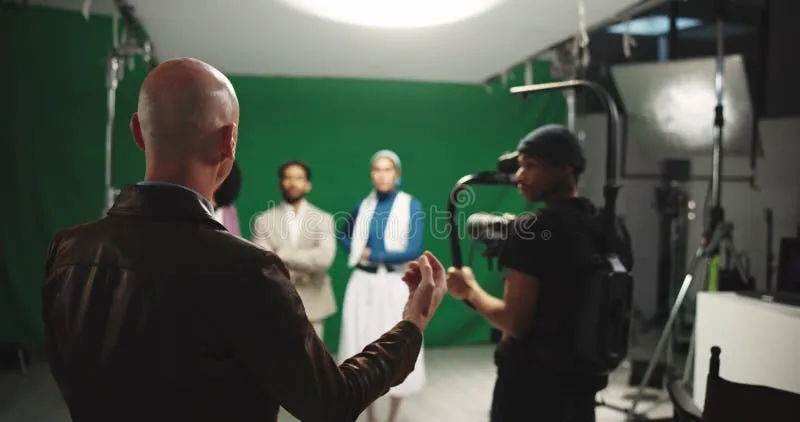
Photo: Automatik99, CC BY-SA 4.0, via Wikimedia Commons
Filmmaking is an exercise in subtraction. The scripts that arrive on the first day of production are rarely the films that reach audiences, and the distance between those two versions is measured not just in footage but in judgment calls — about character, pacing, emphasis, and ultimately, meaning. For Ethos The Movie, that distance was considerable, and the choices made along the way illuminate something essential about what the project was always trying to become.
In a series of conversations with the film's director, editor, and members of the core creative team, a picture emerges of a production that was willing — sometimes painfully so — to sacrifice material it genuinely valued in service of a story that demanded precision above all else.
The Script That Came Before the Script
The screenplay that eventually became Ethos The Movie went through multiple substantive drafts before a single frame was shot. The earliest versions, by the screenwriter's own account, were significantly broader in scope — featuring a larger ensemble of characters and a narrative structure that traced ethical compromise across multiple institutional settings simultaneously.
"The first draft was ambitious in the way that first drafts often are," the director recalled. "It was trying to say everything at once. Which meant, in practice, that it wasn't saying anything with the clarity we needed."
The decision to narrow the focus — to center the story on fewer characters navigating a more contained set of circumstances — was made before cameras rolled, but it established a principle that would govern every subsequent editorial decision: specificity over scope. A film about everything is, paradoxically, a film about nothing. Ethos The Movie committed early to being a film about something precise.
Among the elements excised in early script revisions was a secondary storyline involving a character who functioned, in structural terms, as a moral counterweight to the protagonist — someone who had made the compromises the central character was resisting, and who carried the visible consequences of those choices. The storyline was well-written and, by several accounts, emotionally compelling. It was cut nonetheless.
"It was doing the audience's interpretive work for them," the editor explained. "It was showing them what we wanted them to feel, rather than trusting them to arrive there on their own. Once we saw that, it had to go."
On the Cutting Room Floor
Several sequences that were shot in full did not survive the editing process. Among the most discussed within the production was an extended scene set in the aftermath of the film's central confrontation — a quiet, dialogue-heavy exchange that provided considerable context for the protagonist's state of mind.
The scene was, by most technical measures, strong. The performances were precise, the writing economical, and the cinematography consistent with the film's visual grammar. It was cut because it arrived, in the final assembly, approximately four minutes too late.
"By the time we reached that scene in the cut, the audience had already done the emotional work it was designed to facilitate," the director noted. "Leaving it in would have been like explaining a joke. The film had already trusted its viewers. That scene didn't."
This dynamic — where material is removed not because it fails on its own terms, but because the film around it has grown past the need for it — recurred throughout the editorial process. The editing team described a version of the film that ran nearly twenty-two minutes longer than the final cut, not because of excess in any individual scene, but because the cumulative effect of every scene doing its job meant that certain moments of explicit articulation became redundant.
The Scene That Almost Changed Everything
Perhaps the most consequential editorial debate of the entire production centered on a sequence that appears, in the final film, in significantly altered form. In its original version, the scene depicted the protagonist making a choice that the screenplay framed — through staging, dialogue, and score — as unambiguously correct. It was a moment of moral resolution, clearly signposted and emotionally satisfying.
During a late-stage editorial review, a member of the creative team raised a concern that initially met resistance: the scene, as constructed, was too clean. It resolved a tension that the film had spent its entire runtime refusing to resolve. It offered, in the final act, precisely the kind of ethical certainty that the story had been arguing against.
"We had written the film we wanted to make, and then in one scene, we'd written a different film," the screenwriter acknowledged. "It took a while to see it, because the scene itself worked. It was satisfying. That was the problem."
The sequence was recut, the score was altered, and a single line of dialogue was removed. The resulting scene is more ambiguous, more demanding of its audience, and — by the assessment of everyone involved — more honest to what Ethos The Movie was always trying to be.
The Editor's Lens: Integrity as a Structural Principle
The film's editor, whose previous work spans both independent features and larger studio productions, described the editing process on Ethos The Movie as unlike anything in their prior experience — not because of the technical complexity involved, but because of the consistency with which the creative team returned to a single evaluative question: does this serve the story's integrity, or does it serve our attachment to what we made?
That distinction — between narrative integrity and creative attachment — proved to be the operative standard by which nearly every contested decision was ultimately resolved. Material that the team had invested significant effort in producing was removed when it was found to serve the second category rather than the first.
"You fall in love with your footage," the editor observed. "That's natural, and it's not entirely a bad thing — it means you cared about making it. But the film doesn't care about your feelings. It only cares about what it needs."
What Remains
The final cut of Ethos The Movie is, in the estimation of its creative team, a more disciplined and more honest work than any earlier version of the project. The scenes that were removed, the storylines that were compressed, and the moments of false resolution that were excised represent not failures of the production but evidence of a creative process that was willing to hold itself accountable to its own standards.
In a film explicitly concerned with the costs of ethical compromise, the decision to refuse compromise in the editing room carries a resonance that extends beyond craft. Ethos The Movie is, among other things, a film about what it costs to mean what you say. The choices documented here suggest that its makers understood that obligation began long before the first audience took their seat.