Facing the Mirror: How the Cast of 'Ethos The Movie' Learned to Inhabit Their Own Contradictions

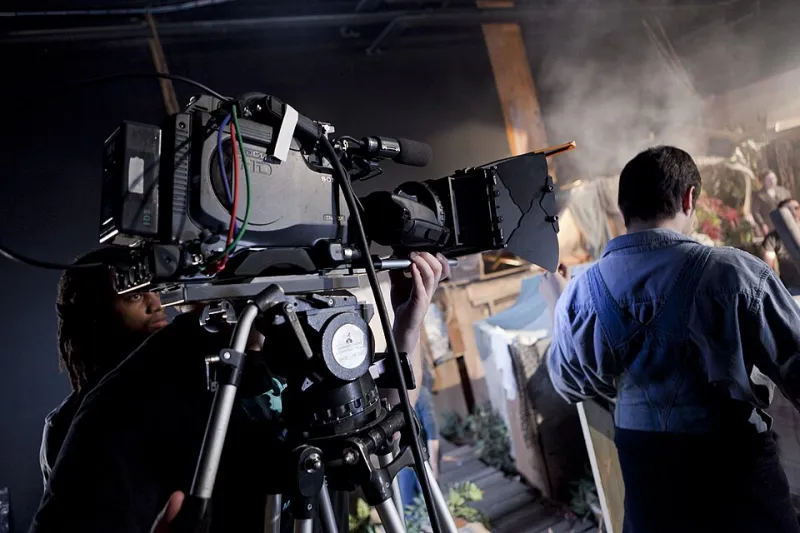
Photo: actors in serious rehearsal discussion with director film set, via img.freepik.com
There is a particular kind of discomfort that arrives when an actor realizes they genuinely understand a character they were initially certain they could never defend. For the cast of Ethos The Movie, that discomfort was not incidental to the work — it was the entire point.
From the earliest stages of pre-production, the film's director made one expectation unmistakably clear: no character in this film would be permitted the luxury of simple villainy or uncomplicated virtue. Every person on screen would carry the weight of their own contradictions. The actors, in turn, would have to carry that weight themselves before a single frame was shot.
The Philosophical Foundation
The preparation process began not on a rehearsal stage but in a seminar room. The production arranged a series of structured sessions with professional ethicists — scholars specializing in moral philosophy, applied ethics, and the psychology of decision-making under pressure. These were not motivational talks or broad overviews of right and wrong. They were rigorous, sometimes confrontational examinations of how ordinary people justify extraordinary failures of integrity.
The cast was introduced to concepts that most actors rarely encounter in their craft preparation: moral licensing, the bystander effect, motivated reasoning, and the ways in which sincere self-belief can coexist with profound hypocrisy. These are not abstract academic concerns. They are the mechanisms by which real people — in institutions, in families, in positions of public trust — convince themselves that what they are doing is acceptable, even admirable.
For actors accustomed to building characters from the outside in — from physicality, dialect, and biography — this approach demanded something different. It required them to construct their characters from a foundation of genuine moral ambiguity, without the reassurance of knowing where the audience's sympathy was supposed to land.
Sitting With Discomfort
One of the more demanding elements of the preparation involved what the director described as "contradiction sessions" — extended one-on-one conversations in which each actor was asked to articulate, in their own voice and without the shield of character, where they personally experienced gaps between their stated values and their actual behavior. These sessions were not filmed or shared with the broader cast. They were private, and they were reportedly uncomfortable in ways that proved professionally transformative.
The purpose was not confession or therapy. It was precision. The director's argument was straightforward: an actor who has never genuinely examined their own capacity for self-deception will inevitably telegraph judgment when playing a character who self-deceives. That telegraphed judgment is what turns a complex human being into a caricature. And caricature, in a film built entirely around moral authenticity, would be catastrophic.
By requiring each cast member to locate real, personal experience of contradiction — moments in their own lives when they had rationalized, deflected, or simply looked away — the preparation process gave the performances an interior texture that no amount of external research could have supplied.
The Risk of Sympathy
Perhaps the most counterintuitive element of the actors' preparation was the deliberate cultivation of sympathy for characters the script itself subjects to significant moral scrutiny. The production brought in consultants familiar with the real-world environments the film depicts — individuals who had worked within institutions where ethical compromise becomes normalized, where the distance between a person's self-image and their actual conduct quietly expands over years.
These conversations were designed to help the cast understand not merely what their characters did, but how those characters experienced themselves while doing it. The vast majority of people who participate in institutional wrongdoing do not think of themselves as wrongdoers. They think of themselves as pragmatists, as team players, as people who understand how the world actually works. Capturing that psychology without endorsing it — making it legible without making it comfortable — required the actors to hold two things simultaneously: genuine empathy and clear-eyed awareness.
That balance is extraordinarily difficult to sustain. It is also precisely what prevents a film about moral failure from becoming a simple morality play.
Rehearsal as Reckoning
When the cast finally came together for ensemble rehearsals, the philosophical groundwork had already shifted the dynamic in ways that were immediately apparent. Actors who might otherwise have defaulted to playing against each other — the virtuous character versus the compromised one, the honest witness versus the self-serving institution — instead found themselves playing alongside each other in a more complicated register.
The director structured key rehearsal sequences around moments of mutual recognition: scenes in which characters who hold opposing positions are forced to acknowledge the legitimacy of what the other person is protecting. These rehearsals were not about finding common ground in the sentimental sense. They were about dramatizing the genuine difficulty of moral clarity when real interests, real loyalties, and real fears are at stake.
Several cast members have described these rehearsals as among the most demanding of their careers — not physically, but cognitively and emotionally. The work required sustained attention to a kind of psychological truth that conventional dramatic training rarely emphasizes: the truth of people who are not lying, exactly, but who are not fully honest either.
What the Audience Inherits
The ultimate measure of this preparation is not critical recognition or awards consideration, though both may follow. The measure is whether an audience member leaves the theater having recognized something in these characters that they would prefer not to have recognized in themselves.
That is a specific and demanding goal. It requires performances that do not permit the audience the comfort of distance — that make the characters' rationalizations feel not foreign but familiar, not alien but uncomfortably close to the kind of reasoning any person might employ on a difficult day.
The cast of Ethos The Movie spent months making themselves uncomfortable in order to achieve that effect. The result is a set of performances that ask something rare of their audience: not admiration, not condemnation, but honest recognition. In a cinematic landscape that too often flatters its viewers, that is a genuinely radical act.