Light as Judgment: The Camera Language That Powers 'Ethos The Movie'
Photo: Malay Film Productions, Public domain, via Wikimedia Commons
Audiences leave 'Ethos The Movie' talking about the story, the arguments, the discomfort. Rarely do they talk about the camera — which is precisely the point. The film's cinematography is built to be felt rather than noticed, a system of visual pressure that guides the viewer toward judgment without ever announcing itself. Understanding how it works requires slowing down and looking at the looking.
The Lens as a Moral Position
The production shot almost entirely on moderate prime lenses — 35mm and 50mm dominating the package — and the choice is not merely stylistic. Wide-angle lenses exaggerate and cartoon; long lenses flatter and distance. The moderate primes do neither. They render faces at approximately the scale a human being occupies across a dinner table. The viewer is placed, shot after shot, at conversational distance from people who may be lying, confessing, or deciding something irreversible.
When the film does break this discipline, the break is a statement. A single scene shot on a long lens compresses a crowded street into a mass of strangers, flattening them into wallpaper — a visual argument about how easily people become background to one another. The lens does what the dialogue never states aloud.
Framing That Refuses Refuge
Watch the compositions closely and a pattern emerges: characters are rarely given clean space. Doorways bisect faces. Furniture edges intrude. Negative space, so often used in cinema to suggest freedom or isolation, is here used to suggest entanglement — no one in this film is ever fully out of the frame of anyone else's choices.
The two-shots deserve particular attention. Rather than the balanced, symmetrical pairings of classical Hollywood, the film favors compositions in which one character occupies substantially more frame than the other, and the imbalance shifts as power shifts within the scene. In the kitchen confrontation that closes the second act, the camera holds a static frame for nearly four minutes while the characters' positions within it — who faces the lens, who turns away — quietly track the reversal of moral authority between them. Nothing moves except the truth.
Light Without Mercy
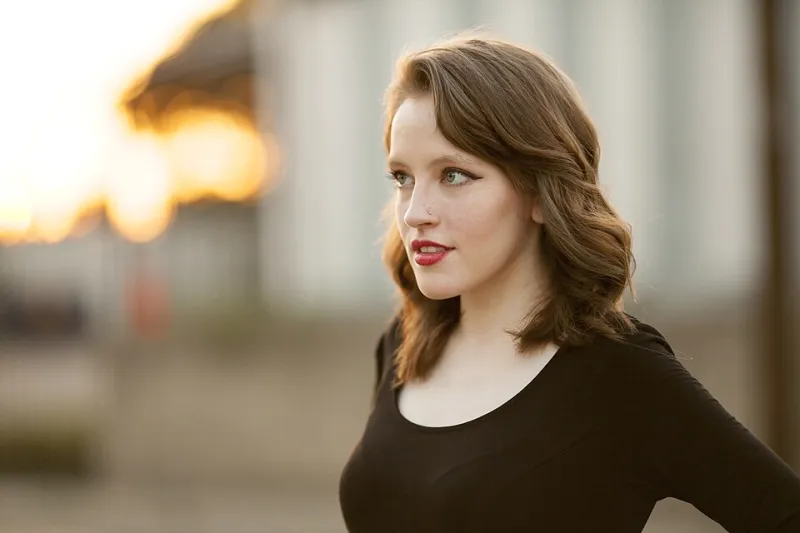
The lighting philosophy can be described in one sentence: nobody gets the flattering key. Faces are lit from sources that exist within the world of the film — windows, lamps, fluorescent ceilings — and those sources are often unkind. Overhead practicals carve shadows into eye sockets during the interrogation scenes. Late-afternoon window light, warm and forgiving in most films, here falls on characters at moments of failure, its beauty sharpening the sting.
The director of photography has described the approach as 'light as witness.' The point is not to make anyone look guilty; it is to make no one look exempt. Even the film's most sympathetic figures are photographed with the same unglamorous honesty as its least. Visually, the movie practices what it preaches: equal scrutiny for all.
The Camera That Won't Cut Away
Perhaps the boldest technical choice is temporal rather than spatial. The film holds shots past the comfort threshold — not in the aggressive, confrontational mode of endurance cinema, but in a patient, almost polite way that asks the audience to keep company with a moment they would rather leave. The average shot length runs noticeably longer than contemporary American features, and the longest takes are reserved not for spectacle but for hesitation: a hand hovering over a phone, a pause before an answer.
In those held frames, the audience does the work. The editing refuses to tell us what the hesitation means, so we decide. It is the cinematographic equivalent of the film's central thesis — that judgment, to be honest, must be rendered by the person holding the view.
What the Camera Knows
Great cinematography in service of a moral argument is rare because it must be invisible; the moment an audience notices the technique, the argument becomes a lecture. 'Ethos The Movie' threads that needle with unusual discipline. Its lenses keep us at human distance, its frames keep us entangled, its light keeps us honest, and its patience keeps us present.
Watch it again and watch the frame instead of the faces. You may find that the camera reached its verdict long before you did — and that it was waiting, politely, for you to catch up.