Growing Up Ethos: When a Movie Becomes a Moral Textbook

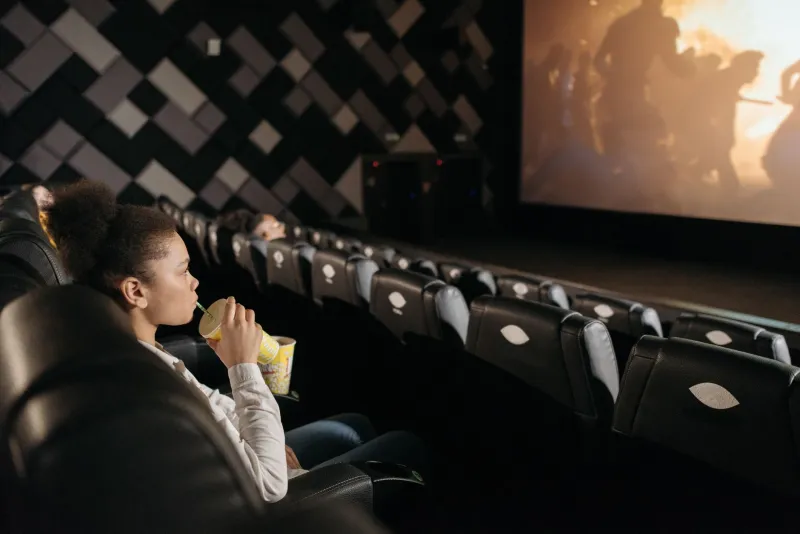
Photo: Matthew T Rader, CC BY-SA 4.0, via Wikimedia Commons
Every generation has its formative texts. The Greatest Generation had radio serials and the war. Baby Boomers had Dylan and the evening news. Millennials had, depending on who you ask, either 'The Matrix' or a smartphone. And the youngest American adults? A surprising number of them will tell you, without irony and without flinching, that it was a movie. Specifically, this one.
Spend time in the comment sections, the fan forums, and the campus screening circuits, and you will find teenagers and twenty-somethings who do not merely admire 'Ethos The Movie.' They cite it. They quote it the way earlier generations quoted scripture or Springsteen. One college sophomore described it in a term paper as 'the first thing that told me the truth about myself.' A high school teacher in Ohio reports that her students reference it the way they once referenced TikTok trends — casually, constantly, as shared vocabulary.
This is worth taking seriously, and it is worth being a little uneasy about.
The Meme-First Conversion
Most young viewers did not encounter the film in a theater. They met it in fragments: a forty-second clip of a monologue, a screenshot of a line overlaid on a photograph of a crowded subway, a reaction meme deployed after a friend's moral failure. The film entered their lives the way most things enter young American lives now — sideways, in pieces, stripped of context.
And yet the fragments carried the whole. Something in the film's DNA survives compression. A single scene, cropped and captioned, still manages to ask its question. The full experience, when they eventually seek it out — and many do — lands not as revelation but as confirmation of something they already suspected they were.
The Comfort and the Danger of a Shared Compass
There is something genuinely moving about watching a nineteen-year-old in a dorm common room work through a personal dilemma by asking, 'What would the movie say?' It suggests a hunger for ethical seriousness that no algorithm fed them. In a culture that monetizes distraction, they chose a film that demands reflection. That is not a small thing.
But a movie is not a moral tradition. It has no elders, no accountability structure, no mechanism for correction when its teachings are misapplied. A film that teaches a generation to trust its conscience also teaches that generation to trust itself — and conscience, untethered, can drift toward self-righteousness as easily as toward integrity. The film knows this; it is, in part, about this. Its fans do not always remember that chapter.
What the Churches and Schools Are Not Providing
The obvious question: why is a movie filling this role? The honest answer is that the traditional institutions of moral formation — religious congregations, civic organizations, even the family dinner table — have thinned out across American life. Young people have not stopped searching for an ethical framework. They have simply started finding them in new places.
A film, at its best, is a portable teacher. It travels. It repeats itself identically on every viewing. It does not flake on you, does not embarrass you in front of your friends, does not ask for a donation. For a generation raised on on-demand everything, a formative text that streams on demand makes a certain grim sense.
The Test Comes Later
Here is the thing about formative texts: their true influence shows up years later, in decisions made when no one is watching and no clip is rolling. Whether 'Ethos The Movie' has genuinely shaped a generation's character, or merely furnished its aesthetic of seriousness, will be determined in courtrooms, hospital rooms, boardrooms, and voting booths over the coming decades.
My own view, offered as opinion rather than verdict: a generation that lets a difficult film interrogate it is healthier than one that lets a scroll anesthetize it. The risk is real, but so is the promise. The kids are not alright — they will tell you so themselves, usually right after quoting the movie. But they are looking. And for now, they are looking at the screen.
That is either a warning or a hope. Ask them which. They have opinions, and — true to form — they have a scene to show you that explains everything.