Designed to Disturb: Why 'Ethos The Movie' Withholds the Answers You Came For

There is a particular kind of discomfort that settles in after the final frame of Ethos The Movie fades to black. It is not the discomfort of confusion, nor the frustration of a story poorly told. It is something far more intentional — the discomfort of being handed a mirror and asked to finish the sentence yourself. The film does not resolve its central moral tensions. It does not excuse its characters, vindicate them, or condemn them with any finality. That withholding is not an oversight. It is the entire point.
In an era when American audiences have grown accustomed to narratives that deliver ethical verdicts alongside their closing credits, Ethos The Movie does something genuinely countercultural: it trusts its viewers to sit with uncertainty. Understanding why the filmmakers made that choice — and why it succeeds — requires a close look at the specific moments where the screenplay steps to the edge of resolution and then, deliberately, steps back.
The Architecture of Open Endings
Screenwriting doctrine, as taught in virtually every film program across the country, insists on closure. Characters must arc. Conflicts must resolve. The audience must leave with a sense of earned completion. Ethos The Movie absorbs that doctrine and systematically dismantles it, not out of contempt for craft, but out of fidelity to a more demanding kind of truth.
The film's narrative structure is built around a series of moral crossroads — moments where characters are forced to make choices that carry genuine consequence. What distinguishes these moments from their counterparts in conventional cinema is that the film never adjudicates them. A choice is made. Life continues, altered. The camera moves on without editorial comment. No swelling score signals that the right decision was reached. No subsequent scene arrives to confirm or deny the wisdom of what just occurred.
This structural pattern is not accidental. It reflects a considered argument about the nature of ethical decision-making in the real world, where most choices do not come equipped with immediate feedback about their moral validity. Americans navigate these ambiguities daily — in workplaces, families, and communities — and rarely receive the closure that cinema so often promises.
The Scene That Refuses to Blink
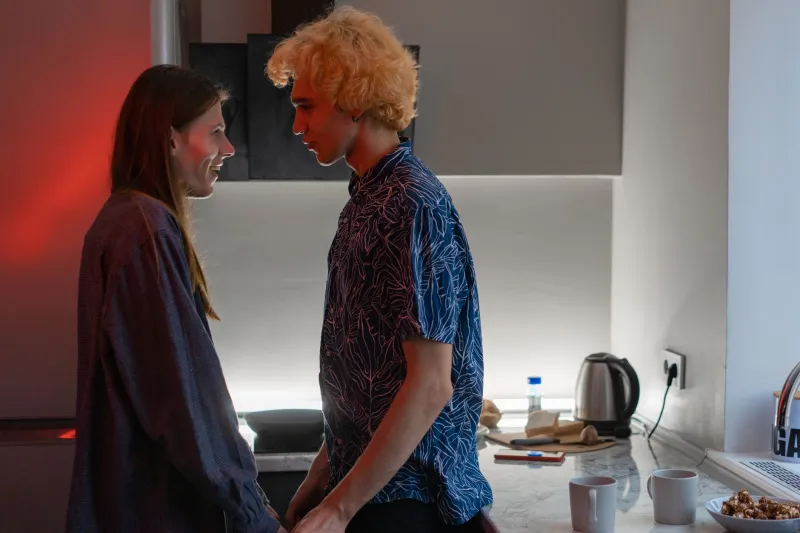
Perhaps the most discussed moment in Ethos The Movie arrives in the film's second act, during a confrontation that has been building since the opening sequence. Two characters face each other across a divide that is simultaneously personal and philosophical. Words are exchanged. A decision is reached. And then — nothing. No catharsis. No collapse. No confirmation that what just happened was right or wrong, brave or cowardly, principled or self-serving.
Audiences at early screenings reportedly waited for the scene to continue. Some assumed the edit was incomplete. It was not. The stillness that follows the decision is itself a statement — an insistence that moral weight does not always announce itself, that the significance of a choice may not be legible in the moment of its making.
This is the film's most radical formal gesture. Hollywood has long trained viewers to recognize moral significance through cinematic shorthand: the dramatic pause, the meaningful glance, the musical cue that tells you how to feel. Ethos The Movie strips away that shorthand and leaves audiences responsible for their own interpretation. It is an act of profound respect, and for some viewers, a deeply unsettling one.
Ambiguity as Argument
Critics who have described the film's unresolved threads as a flaw are, in a meaningful sense, making the film's argument for it. The expectation of resolution — the assumption that a story well-told must deliver verdicts — is precisely the cultural reflex that Ethos The Movie seeks to interrogate.
Consider the subplot involving a secondary character whose actions are morally compromised but whose motivations are rendered with genuine sympathy. The film never asks the audience to forgive this character, nor does it ask them to condemn. It simply presents the full complexity of a person operating under pressure, making imperfect choices in an imperfect world, and then allows that complexity to stand without reduction.
This is not moral relativism. The film is not arguing that all choices are equally valid or that ethics are merely subjective. It is arguing something more nuanced and more demanding: that the work of moral discernment belongs to the viewer, not the filmmaker. The screenplay provides the materials for judgment. It refuses to perform that judgment on the audience's behalf.
In this sense, Ethos The Movie functions less like a traditional narrative and more like an extended ethical exercise — a structured encounter with difficulty designed to produce not conclusions, but capacities. The capacity to tolerate ambiguity. The capacity to hold competing truths simultaneously. The capacity to resist the comfort of easy answers in a world that rarely offers them.
The American Context
There is something particularly resonant about this approach for American audiences at this cultural moment. The country is navigating a period of profound moral complexity — political, social, and institutional — in which simple narratives of good and evil have repeatedly proven inadequate to the actual texture of events. The demand for clarity, for heroes and villains, for resolution, is understandable. It is also, Ethos The Movie quietly suggests, a demand that reality cannot always satisfy.
The film's refusal to provide easy answers is, in this light, a form of civic honesty. It acknowledges that the ethical dilemmas facing American communities — questions of accountability, loyalty, justice, and compromise — do not resolve neatly. They accumulate. They persist. They require ongoing engagement rather than final verdicts.
By building that acknowledgment into its very structure, Ethos The Movie offers something more durable than comfort. It offers preparation.
What the Silence Asks of You
The moments in Ethos The Movie where the narrative falls silent are not failures of storytelling. They are invitations — formal, deliberate, and carefully constructed invitations — to do the work that the film has declined to do on your behalf.
When a character's fate is left unresolved, the question of what that fate means is transferred to the audience. When a moral choice is made without editorial endorsement, the responsibility for evaluating that choice rests with the viewer. This transfer of responsibility is not comfortable. It is not meant to be.
What it is, ultimately, is an act of confidence — confidence that audiences are capable of engaging with complexity without being guided to predetermined conclusions. In an industry that has long underestimated that capacity, Ethos The Movie makes a different bet. The evidence suggests it is winning.