Seeds of Conscience: The Independent Films That Grew in the Shadow of 'Ethos The Movie'
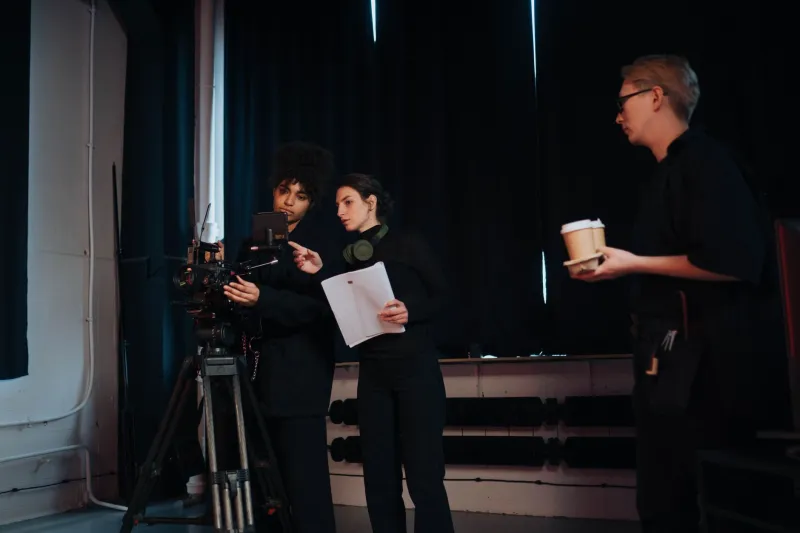
When 'Ethos The Movie' demonstrated that moral storytelling could command both critical respect and genuine audience investment, it sent a signal through the independent filmmaking community that many were waiting to receive. A new wave of conscience-driven projects has since emerged, each bearing, to varying degrees, the imprint of what 'Ethos' proved possible. Whether these films constitute a lasting movement or a temporary current remains one of the more compelling questions facing American independent cinema in 2024.
A Permission Slip for Difficult Material
For years, a persistent assumption within independent film financing circles held that moral complexity was a commercial liability. Stories built around ethical ambiguity, institutional accountability, or the quiet costs of principled living were considered difficult sells — admired at festivals, overlooked at the box office. 'Ethos The Movie' did not merely challenge that assumption. It dismantled it with documented receipts.
The film's performance gave emerging filmmakers something more valuable than inspiration: it gave them an argument. When approaching investors, distributors, or even cast members reluctant to commit to demanding material, directors could point to 'Ethos' as evidence that American audiences were not only willing to sit with moral discomfort but were actively seeking it out. That shift in the negotiating room may prove to be one of the film's most consequential, if least visible, contributions to the industry.
Three Projects Worth Watching
Among the independent productions that entered development or completed principal photography in 2024 with an acknowledged debt to 'Ethos The Movie,' several merit particular attention.
'The Ledger', a drama set within a regional accounting firm in rural Ohio, centers on a mid-level employee who discovers systematic financial manipulation that has quietly devastated a local pension fund. The film's director, speaking at a regional festival screening earlier this year, cited 'Ethos' as the project that convinced her the story did not need to be softened. "I had been told to add a redemption arc that wasn't really there in the source material," she noted. "Watching what 'Ethos' did with moral irresolution — watching how audiences responded to that — gave me the confidence to hold the line."
'Ordinary Witness', produced on a budget of under two million dollars, follows a public school teacher in the Pacific Northwest who becomes entangled in a community dispute over the handling of a student's misconduct complaint. The film deliberately resists assigning clear heroism to any single character, a structural choice its producer described as "the 'Ethos' lesson applied to a smaller canvas." The project secured distribution within weeks of its festival premiere, a timeline that would have been considered optimistic for material this tonally restrained even eighteen months ago.
'Fault Lines', a documentary-fiction hybrid examining three families navigating the aftermath of a corporate environmental settlement in Appalachia, has drawn comparisons to 'Ethos' for its refusal to separate personal moral failure from systemic pressure. Its co-directors have been explicit about the influence, stating in a written interview that the commercial viability 'Ethos' established made their pitch to a regional arts foundation significantly more persuasive.
The Question of Movement Versus Moment
Identifying a trend in independent cinema is an exercise that demands caution. The history of American film is littered with proclamations of new movements that proved, in retrospect, to be clusters of coincidence rather than evidence of genuine creative solidarity. The emergence of several ethically-driven independent projects in the wake of 'Ethos The Movie' is notable, but it does not yet constitute a movement in any rigorous sense of the term.
What can be said with greater confidence is that 'Ethos' has altered the landscape of possibility. It has demonstrated a viable model — not just creatively, but financially and strategically — for films that refuse moral convenience. Whether subsequent filmmakers can replicate that model consistently, or whether 'Ethos' benefited from a particular alignment of cultural timing and creative execution that cannot simply be reproduced, remains genuinely unclear.
Some industry observers argue that the film's success was less about its moral architecture and more about its execution — that the conscience-driven narrative worked because every other element, from performance to cinematography to sound design, was operating at an exceptional level. On this reading, the lesson for other filmmakers is not that ethical storytelling is commercially viable per se, but that exceptional filmmaking is commercially viable, and 'Ethos' happened to combine that excellence with moral seriousness.
Others contend that the cultural moment is itself a structural factor — that American audiences in 2024 are responding to a broader hunger for stories that take ethical life seriously, and that 'Ethos' arrived as the most fully realized expression of a demand that was already present.
What the Emerging Films Reveal
Examining the projects that have explicitly cited 'Ethos The Movie' as an influence reveals a pattern worth noting. None of them are attempting to replicate its specific narrative or aesthetic choices. What they appear to have absorbed is something more foundational: the conviction that an audience can be trusted with complexity, that the camera does not need to rescue the viewer from difficult conclusions, and that moral seriousness is not the same thing as moral instruction.
That last distinction matters considerably. 'Ethos' does not tell its audience what to think. It constructs conditions under which thinking becomes unavoidable. The films that have followed in its wake, at their most promising, appear to have understood that this is the lesson worth carrying forward.
The Longer Arc
The full measure of 'Ethos The Movie's' influence on independent American cinema will not be legible for several years. Films currently in development will take time to reach audiences. The projects that fail quietly will not generate festival coverage or distribution announcements. The ones that succeed will attract retrospective analysis that may overstate the coherence of any movement they appear to belong to.
What is observable now, in the immediate aftermath of 'Ethos,' is a community of filmmakers who are making different decisions than they might have made two years ago — decisions about what stories to pursue, how to frame moral complexity, and how to make the case to the people who control financing that conscience-driven cinema is not a charitable endeavor but a legitimate one.
That change in decision-making, modest and incremental as it may appear, is precisely how lasting shifts in creative culture tend to begin.