Conscience Over Commerce: How 'Ethos The Movie' Lit a Fuse Beneath Independent American Cinema
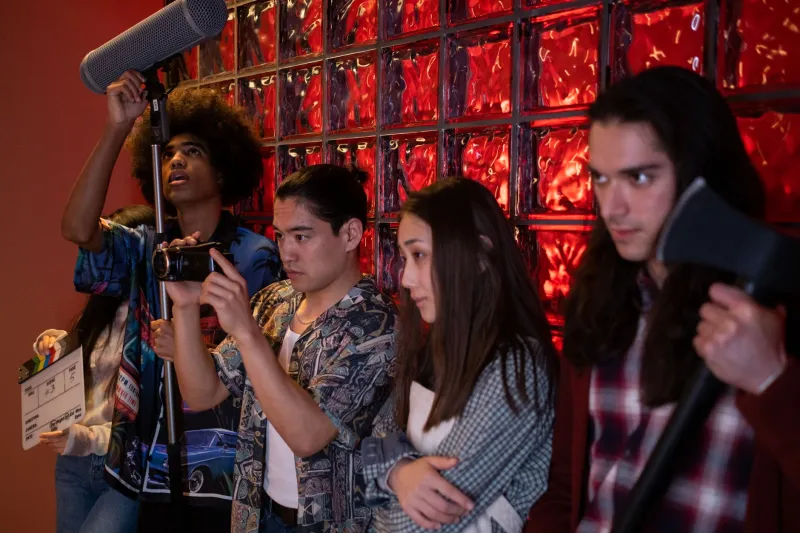
There is a particular kind of courage required to greenlight a film whose central argument is discomfort. For decades, the conventional wisdom circulating through independent production circles held that morally demanding narratives were a box office gamble — admired at festivals, discussed in academic journals, and quietly shelved by distributors nervous about mainstream returns. That wisdom is now being openly challenged, and the disruption can be traced, with striking consistency, back to the cultural moment created by Ethos The Movie.
Across the country, from production companies operating out of converted warehouses in Detroit to small creative collectives working in Austin and Portland, a discernible pattern has emerged: filmmakers who once shaped their projects around marketability are now beginning — deliberately, even defiantly — with the question of what they believe.
A Permission Slip the Industry Did Not Expect
For many independent filmmakers, the commercial and critical reception of Ethos The Movie functioned less like inspiration and more like formal authorization. It demonstrated, through measurable outcomes, that American audiences were not only capable of engaging with ethically intricate storytelling but were actively seeking it out.
Director Mara Solano, whose debut feature The Weight of Standing Still entered post-production earlier this year, described the effect candidly: "Before Ethos, I kept softening the harder edges of my script because every producer I met told me the moral ambiguity would alienate viewers. After Ethos, I stopped apologizing for the difficulty. The audience had already proved everyone wrong."
This sentiment recurs with notable frequency among emerging voices in American independent cinema. The film did not merely perform well — it reframed what performance could mean for a project built on principle rather than formula.
The Architecture of Influence
Understanding why Ethos The Movie has exerted such gravitational pull on the indie sector requires looking beyond its box office figures and toward the specific structural choices that distinguished it from its contemporaries. The film refused the consolations that commercial cinema typically extends to its audience: easy resolutions, morally legible heroes, and the comfortable assurance that ethical clarity is achievable if one simply tries hard enough.
These are precisely the elements that independent filmmakers cite when explaining what changed in their own creative thinking. Marcus Webb, a producer based in Chicago who has developed three projects since the film's release, noted that the experience of watching Ethos in a packed theater fundamentally altered his understanding of audience tolerance. "People weren't restless. They weren't looking for the exit. They were leaning in. That told me something I hadn't fully believed before — that difficulty, when it's honest, creates engagement rather than resistance."
The structural influence has been equally concrete. Several emerging directors have spoken about adopting a practice of what one filmmaker called "ethical pressure-testing" — running each narrative decision through a framework that asks not whether it serves the plot, but whether it serves the truth the film is trying to tell. That methodology, borrowed consciously or otherwise from the apparent philosophy behind Ethos, represents a meaningful departure from the market-reverse-engineered development processes that have long dominated independent production.
The Festival Circuit as a Barometer
The shift is becoming visible at the institutional level as well. Programming directors at several regional and national film festivals have noted a marked increase in submissions centered on moral and ethical themes over the past two submission cycles. While correlation does not establish causation, the timing aligns closely with the cultural footprint left by Ethos The Movie.
At Sundance, where the pulse of American independent cinema is perhaps most reliably felt, conversations among programmers and attendees alike have increasingly turned to the question of whether a new movement is coalescing — one defined not by aesthetic style or geographic origin, but by a shared commitment to films that refuse to let their audiences off the hook.
This is, in many respects, a more durable foundation for a cinematic movement than style alone. Aesthetic trends cycle rapidly. A commitment to moral seriousness, once embedded in a filmmaker's creative identity, tends to persist.
The Risks That Remain
It would be premature, however, to declare the revolution complete. The independent film sector remains financially precarious, and the pressures that once pushed filmmakers toward safer, more commercially predictable narratives have not disappeared. Distribution remains a formidable obstacle for films that resist easy categorization, and the streaming platforms that now function as de facto gatekeepers for independent work continue to rely heavily on algorithmic models that favor the familiar.
Several filmmakers interviewed for this piece acknowledged the tension between their creative convictions and the practical realities of getting a film seen. "The Ethos effect gave me the confidence to make the film I needed to make," said documentary filmmaker Priya Nair, whose forthcoming project examines ethical failures within the American healthcare system. "But it hasn't solved the distribution problem. That battle is still very much ongoing."
There is also the question of whether the current wave of conscience-driven projects will sustain the quality necessary to maintain audience trust. Ethos The Movie succeeded not merely because it was morally serious, but because its moral seriousness was inseparable from its craft. Films that adopt the posture of ethical urgency without the accompanying rigor risk producing a backlash that could undermine the very shift they are attempting to advance.
What the Shift Signals About American Audiences
Perhaps the most significant implication of the Ethos effect is not what it reveals about filmmakers, but what it confirms about the audience they are making films for. American viewers, particularly in the current cultural climate, appear to be registering a hunger for cinema that takes them seriously — that does not assume they require reassurance, simplification, or the soft landing of a tidy moral resolution.
This is a meaningful development for an industry that has long underestimated its audience's appetite for complexity. If independent filmmakers continue to respond to that appetite with the kind of integrity that Ethos The Movie modeled, the resulting body of work could constitute something genuinely rare: a cinematic moment defined not by what it looked like, but by what it stood for.
The ripple, it seems, is still moving outward.