The Moment American Cinema Has Been Waiting For: How 'Ethos The Movie' Meets a Nation at a Crossroads
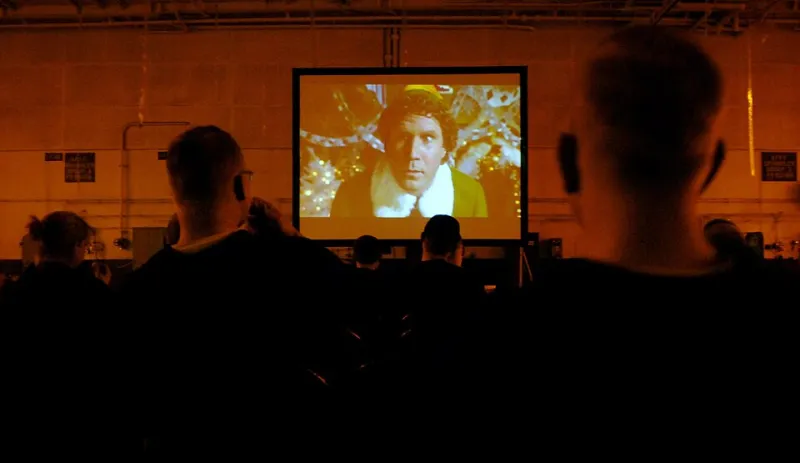
Photo: U.S. Navy photo by Mass Communication Specialist 2nd Class Arturo Chavez, Public domain, via Wikimedia Commons
There is a particular kind of silence that settles over a theater when a film asks something of its audience — not simply their attention, but their conscience. That silence has become increasingly rare in an era dominated by franchise spectacles and algorithmically calibrated crowd-pleasers. Yet it is precisely that silence, that moment of genuine moral reckoning, which 'Ethos The Movie' is designed to provoke. The question worth examining is not merely whether the film succeeds artistically, but why it matters so profoundly at this specific point in American cultural history.
A Nation in Search of Honest Stories
American society is navigating one of its most complex ethical landscapes in recent memory. Conversations about institutional accountability, personal responsibility, the limits of loyalty, and the cost of silence have migrated from academic journals and opinion columns into everyday dinner tables and social media feeds. These are not abstract debates. They are lived experiences for millions of Americans who find themselves confronting questions their parents' generation rarely had to articulate so explicitly.
For much of the past decade, mainstream Hollywood responded to this cultural anxiety by retreating into the familiar comfort of moral clarity — heroes who are unambiguously heroic, villains whose motivations require no interrogation. The box office rewarded this approach handsomely for a time. Yet something has shifted. Audiences who once accepted those clean resolutions are now arriving at theaters with a more demanding set of expectations. They want to recognize themselves on screen, including the parts of themselves that are uncertain, compromised, and struggling.
'Ethos The Movie' does not flinch from that demand.
Timing as Artistic Statement
The release of a film is never truly separate from the world into which it is released. Cinema has always functioned as a mirror, but the most significant films do something more than reflect — they refract. They take the raw light of contemporary experience and bend it into something that reveals angles the unassisted eye cannot perceive.
The cultural moment into which 'Ethos The Movie' steps is one defined by a profound distrust of easy certainty. Americans across the political and social spectrum have grown skeptical of institutions, narratives, and public figures who project unearned moral confidence. The demand is no longer for leaders or stories that pretend complexity does not exist. The demand is for honesty about the difficulty of doing the right thing — particularly when the right thing carries a cost.
This is the precise emotional and intellectual territory that 'Ethos The Movie' occupies. Its story does not arrive with pre-packaged conclusions. It presents its characters — and by extension its audience — with the kind of dilemmas that resist resolution, the kind that linger long after the credits roll.
What Contemporary Audiences Are Actually Asking For
It is worth pausing on the word that gives this film its name. Ethos, in its classical sense, refers to the character or guiding beliefs that distinguish an individual or community. It is not a fixed destination but a living practice — something that must be actively chosen and continuously re-examined. For American audiences in the current moment, that definition carries unusual weight.
Polling and cultural commentary over the past several years have consistently identified a hunger among U.S. moviegoers for films that engage substantively with moral questions. The success of films and limited series that center ethical ambiguity — works that allow protagonists to be wrong, that permit institutions to fail, that resist the urge to redeem everyone neatly by the final act — suggests that this appetite is not merely critical preference but genuine market demand.
'Ethos The Movie' arrives having studied that appetite carefully. Its narrative structure does not offer the audience an escape from moral difficulty; it offers them a companion through it. That distinction is significant.
The Responsibility of Storytelling in a Fractured Landscape
There is a reasonable argument to be made that cinema carries a particular responsibility during periods of social fracture. When public discourse becomes increasingly adversarial and the capacity for nuanced conversation erodes, stories that model the complexity of human ethical life serve a function that extends beyond entertainment. They remind audiences that ambiguity is not weakness, that uncertainty is not failure, and that genuine integrity often looks nothing like the triumphant certainty Hollywood has long preferred to sell.
'Ethos The Movie' takes that responsibility seriously. The filmmakers have spoken openly about their intention to create a work that challenges viewers rather than reassures them — a film that earns its emotional impact not through manipulation but through honest engagement with the difficulty of moral choice.
In that respect, the film represents something larger than a single production. It is a statement about what American cinema can be when it chooses ambition over safety.
Why This Film, Why Now
The convergence of artistic intent, cultural timing, and audience readiness is not something that can be manufactured on demand. It is, when it occurs, a genuine alignment — the kind that produces films remembered not simply for their craft but for their impact on the broader conversation about who Americans are and who they aspire to be.
'Ethos The Movie' arrives at exactly such a convergence. It does not offer the comfort of easy answers because the moment does not call for comfort. It calls for honesty, for the courage to sit with difficult questions, and for the recognition that a nation's character — its ethos — is forged precisely in those moments when the right path is neither obvious nor painless.
For audiences willing to accept that invitation, the film promises something more valuable than entertainment. It promises an encounter with the truth of their own moral lives. In the current landscape of American cinema, that promise is rarer and more necessary than it has been in a very long time.