Rewriting the Rules: How 'Ethos The Movie' Dismantles Hollywood's Ethical Shortcuts
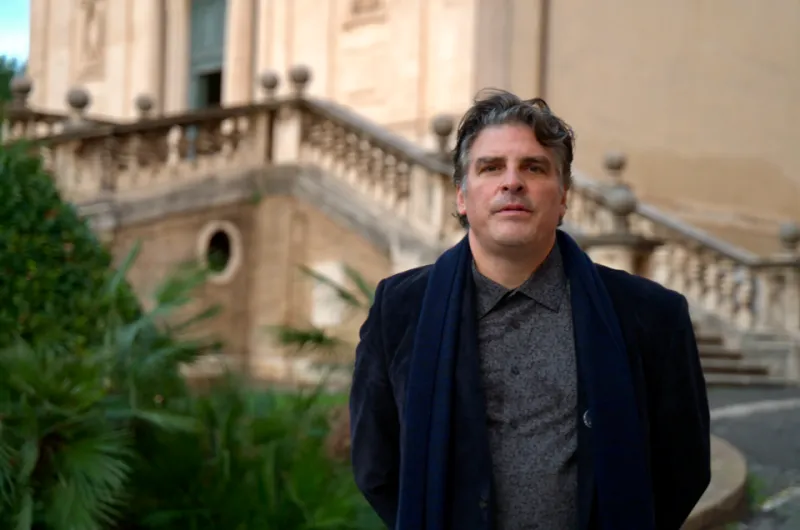
Photo: Nexus Media, CC BY 4.0, via Wikimedia Commons
For decades, American cinema has operated under an unspoken covenant with its audience: present a moral dilemma, escalate the tension, and then resolve it cleanly before the credits roll. The protagonist learns a lesson. The antagonist receives just punishment. The world, however briefly disrupted, returns to a comprehensible order. It is a formula that has generated billions of dollars in box office revenue — and, critics would argue, an equal measure of intellectual complacency.
'Ethos The Movie' is not interested in that covenant.
From its earliest scenes, the film establishes a fundamentally different relationship between narrative and ethics — one in which moral complexity is not a problem to be solved but a condition to be inhabited. This is a meaningful distinction, and understanding it requires a closer look at both the film's structural choices and the broader landscape of recent Hollywood productions that have attempted, with varying degrees of success, to engage similar territory.
The Problem with Ethical Window Dressing
Consider the trajectory of recent blockbusters that have marketed themselves around themes of accountability and integrity. Films such as these frequently deploy moral dilemmas as plot devices — obstacles that characters must overcome in order to reach a predetermined destination — rather than as genuine philosophical terrain. The ethical question is raised, dramatized, and ultimately subordinated to the demands of genre convention.
A superhero franchise installment may ask whether unchecked power corrupts, but the answer is almost always delivered through action sequences rather than through sustained dramatic interrogation. A corporate thriller might position whistleblowing as heroic, yet rarely pauses to examine the institutional pressures that make silence so persistently rational. The appearance of moral seriousness is carefully maintained; the substance, however, is frequently sacrificed on the altar of pacing and commercial appeal.
'Ethos The Movie' resists this substitution from the level of the screenplay itself. The script, by all accounts developed through an unusually rigorous creative process, treats accountability not as a dramatic device but as an organizing philosophical principle. Characters do not simply face choices; they face the full weight of what those choices mean within systems that are neither purely corrupt nor transparently just.
Structure as Argument
One of the most revealing aspects of the film's approach is its deliberate subversion of the three-act moral arc. Traditional Hollywood storytelling tends to locate its ethical revelation at the end of the second act — the moment when the protagonist finally understands what they should have known all along. This placement is not accidental. It ensures that the moral insight arrives in time to fuel the climactic resolution, reinforcing the idea that understanding and action are naturally sequential.
'Ethos The Movie' disrupts this sequence in a manner that will feel genuinely disorienting to audiences accustomed to conventional narrative rhythms. Moral clarity, when it appears at all, does not function as a catalyst for resolution. Instead, it frequently complicates the path forward, introducing new tensions rather than dissolving existing ones. This is, in narrative terms, a profoundly honest choice — one that mirrors the actual experience of ethical decision-making far more accurately than Hollywood convention typically allows.
The result is a film that demands active engagement from its audience. Viewers cannot simply wait for the story to deliver its verdict; they must participate in the ongoing process of evaluation that the narrative refuses to conclude on their behalf.
Comparing the Landscape
To appreciate how distinctive this approach is, it is worth measuring 'Ethos The Movie' against two recent productions that similarly positioned themselves as morally serious cinema.
The first category encompasses prestige dramas — films with awards ambitions and literary source material that nonetheless tend to resolve their ethical tensions through the lens of individual heroism. These productions are often beautifully crafted and genuinely moving, but their moral architecture ultimately privileges the exceptional individual over the systemic forces that shape behavior. The message, however subtly delivered, remains fundamentally reassuring: extraordinary people can navigate impossible situations with their integrity intact.
The second category includes what might be called the cynicism-as-sophistication school — films that mistake moral ambiguity for moral depth. In these productions, every character is compromised, every institution is corrupt, and the refusal to offer resolution is presented as a form of intellectual honesty. Yet this approach carries its own distortions. Pervasive cynicism can function as a different kind of shortcut, absolving the narrative of the difficult work of genuine ethical inquiry.
'Ethos The Movie' occupies neither of these positions. It does not celebrate individual heroism as a solution to systemic problems, nor does it retreat into fashionable nihilism. Its characters are neither paragons nor purely products of their circumstances. They are, in the most demanding sense of the word, responsible — and the film holds them to that responsibility without sentimentality or contempt.
Why Audiences Are Ready
The question of audience appetite is worth addressing directly. There is a persistent assumption within the American entertainment industry that mainstream viewers will not tolerate genuine philosophical complexity — that the moment a film begins to ask hard questions without providing easy answers, the multiplex audience will disengage.
The evidence increasingly suggests otherwise. Across multiple platforms and formats, American audiences have demonstrated a remarkable willingness to engage with morally demanding content when it is presented with craft and conviction. The success of serialized television dramas built around ethically compromised protagonists, the sustained cultural conversation surrounding documentary films that refuse to deliver simple verdicts, the growing appetite for international cinema that operates outside Hollywood's conventional moral grammar — all of these trends point toward an audience that is, in fact, hungry for exactly what 'Ethos The Movie' appears to offer.
What audiences resist, the evidence suggests, is not complexity itself but the appearance of complexity without the substance. They can sense when a film is performing seriousness rather than achieving it. 'Ethos The Movie,' by every indication, is not performing anything.
The Stakes of This Moment
It would be an overstatement to claim that a single film can transform an industry. Hollywood's commercial pressures are real, its risk aversion deeply institutionalized, and its tendency to replicate successful formulas rather than challenge them well documented.
And yet films do shift conversations. They establish new reference points. They demonstrate what is possible, and in doing so, they expand the range of what producers, writers, and directors believe they are permitted to attempt.
'Ethos The Movie' arrives at a moment when that expansion feels not merely desirable but necessary. American cinema has the technical resources, the talent, and — increasingly — the audience to support storytelling of genuine moral ambition. What it has sometimes lacked is the willingness to trust that ambition fully, to follow the difficult questions wherever they lead without flinching toward resolution.
This film appears to possess that willingness. Whether it succeeds in every dimension remains to be seen. But the ambition itself — the determination to take ethics seriously as a dramatic subject rather than a marketing category — represents something worth watching closely.