The Language of Quiet: How 'Ethos The Movie' Turns Silence Into a Moral Reckoning

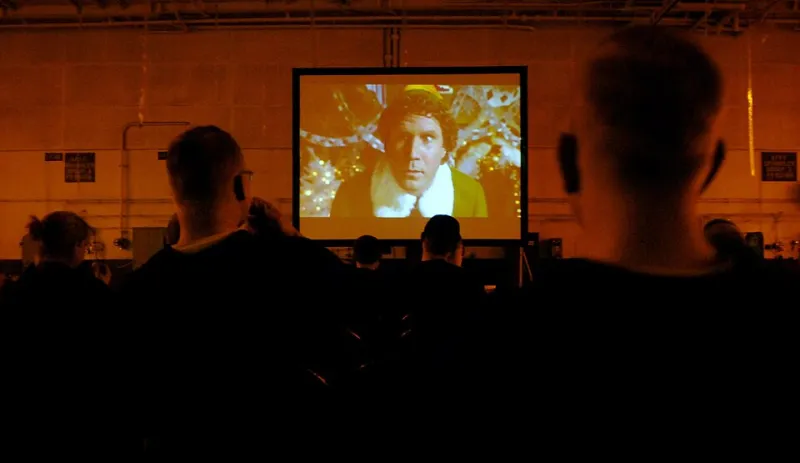
Photo: Cynthia Magana cynthmag, CC0, via Wikimedia Commons
American cinema has long operated under a particular anxiety: the fear of the empty second. Hollywood's default grammar insists that every beat be filled — with score, with dialogue, with ambient noise engineered to guide emotional response. Audiences have been conditioned to receive meaning through sound, to let the soundtrack tell them how to feel before the image has finished making its argument. 'Ethos The Movie' refuses this contract entirely. In doing so, it exposes just how dependent modern viewers have become on being told what to think — and how uncomfortable it is when that guidance is withdrawn.
The Weaponization of Pause
There is a distinction, often overlooked, between silence that is empty and silence that is loaded. The former is an absence; the latter is a presence with weight and intention. Throughout 'Ethos The Movie,' the filmmakers deploy the second variety with surgical precision. Pauses are not resting points between exchanges. They are confrontations. When a character stops speaking mid-confession, or when a scene holds on a face for several beats longer than convention permits, the film is not malfunctioning — it is demanding something from the audience that most films never have the courage to request.
That demand is participation. In the absence of dialogue to follow or music to mirror, viewers are left alone with their own interpretive instincts. The question the film poses in those moments is not rhetorical: What do you believe this person deserves? Without a score swelling to signal sympathy, or a line of exposition resolving ambiguity, the audience must supply the moral verdict themselves. It is an act of creative intimacy that is, for many viewers, genuinely unsettling.
Contrast With the Hollywood Standard
To appreciate what 'Ethos The Movie' accomplishes, it helps to consider what it is working against. The dominant mode of American studio filmmaking treats silence as a liability — a gap to be filled before audiences disengage. Exposition-heavy scripts, wall-to-wall musical underscore, and rapid editorial rhythms all serve the same function: they remove interpretive labor from the viewer and replace it with pre-digested emotional instruction.
This approach is not without its logic. Commercial filmmaking operates under real pressures, and there is genuine skill in crafting a film that efficiently delivers catharsis to the widest possible audience. But efficiency of this kind comes at a cost. When every emotional beat is signposted and every moral question answered before it has time to settle, the film becomes a transaction rather than an experience. The audience receives a product. They are not changed by it.
'Ethos The Movie' makes a different calculation. Its silences are not oversights or stylistic affectations. They are load-bearing structural elements — moments where the film steps back and allows the weight of its subject matter to fall, unmediated, onto the viewer.
Technical Choices That Serve the Quiet
The film's sound design deserves particular attention in this context. Rather than employing silence as a simple absence of score, the production team crafted an acoustic environment in which ambient sound — breath, distant traffic, the faint creak of a room — is allowed to exist without enhancement or dramatization. These textures are present in real life and almost always stripped from conventional film sound mixes, which prioritize clarity and emotional direction over authenticity.
By retaining these unadorned sonic details, 'Ethos The Movie' grounds its quieter sequences in a register that feels less like cinema and more like memory. Audiences do not merely watch the pauses; they inhabit them. The effect is one of proximity — a closeness to the characters and their unspoken dilemmas that polished, score-driven filmmaking rarely achieves.
Editorial choices reinforce this approach. Cuts are held longer than expectation dictates. The camera does not rescue the audience from a difficult face by moving on. Instead, it waits. It insists. The discomfort this generates is not incidental — it is the point.
Silence as Character
Perhaps the most ambitious aspect of the film's approach is the degree to which silence functions as a form of characterization. In conventional screenwriting, characters reveal themselves through what they say. 'Ethos The Movie' is equally interested in what they do not say — and in what the space around their words implies about who they are.
Consider the scenes in which a character faces a moment of moral choice and says nothing. In a lesser film, this might read as dramatic hesitation — a pause before the inevitable speech that clarifies the character's values and moves the plot forward. Here, the silence is the answer. What a person fails to say, the protest they swallow, the clarification they choose not to offer — these omissions are treated as revelatory acts. The film argues, quietly but insistently, that moral identity is as much a product of what we suppress as what we express.
This is a proposition that lands differently for American audiences than it might elsewhere. In a cultural context that prizes directness, self-expression, and the articulate defense of one's position, the suggestion that silence might be a more honest form of communication carries a particular charge. The film does not moralize about this. It simply demonstrates it, and trusts viewers to sit with the implication.
The Audience as Participant
What ultimately distinguishes 'Ethos The Movie's' use of silence from mere stylistic restraint is its ethical dimension. The film's quietest moments are not designed to showcase craft, though the craft is undeniable. They are designed to implicate the viewer. By removing the emotional scaffolding that conventional cinema provides, the film makes the audience responsible for their own response — and, by extension, responsible for what that response reveals.
This is an uncomfortable position to occupy. Most filmgoers arrive expecting to be guided, to be moved in the directions the film chooses, to leave with their existing sympathies confirmed or their horizons gently expanded. 'Ethos The Movie' offers something less comfortable and more valuable: a mirror held steady long enough that looking away becomes its own kind of statement.
In a landscape saturated with films that tell audiences exactly how to feel, the ones that refuse to do so carry a rare authority. The silence in 'Ethos The Movie' is not empty. It is full — full of the questions that words, however carefully chosen, cannot carry alone.